 PMA Award Winner

Portable vs. Rental vs. Custom Trade Show Booths (and the Hybrids In Between): Which Is Right for You?
Dec 4th 2025
Choosing the right trade show booth isn’t just a creative decision — it’s a financial and operational one. Your booth decision shapes budgets, timelines, staffing, logistics, and ultimately how confident your team feels on the show floor. Pick right, and you’ll control cost while commanding attention. Pick wrong, and you’ll overspend without getting the presence you need.
This guide compares the major booth paths for a 10×20 booth and shows where each one shines (and where it doesn’t). We’ll use clear, realistic numbers, and we’ll keep the language plain. You’ll walk away with a framework you can actually use — and numbers you can adapt to your own show calendar.
What We’ll Cover:
- What each booth type really means day-of-show (not just in a brochure).
- Pros and cons that matter to budgets and on-site execution.
- A 10×20 cost model for 1, 3, and 5 shows with line items (booth price, shipping, drayage, and I&D).
- Hybrid approaches that split ownership and rental intelligently.
- Design, logistics, and timeline practices that save real money.
- Buyer scenarios, checklists, and a fast decision framework.
Assumptions (So Our Numbers Are Apples-to-Apples)
We’re comparing options for a 10×20 booth. To keep things simple and useful:
- Graphics are included in the first-show booth price for owned paths (you reuse them afterward). Rentals include graphics each show as part of the rental fee.
- Shipping, drayage, and I&D (install & dismantle) repeat each show for all options, though the amounts differ by option.
- For rental and Hybrid: Own Core + Rent Components, there’s a repeat booth price component after show one. For custom build, the booth price is $0 after show one (you own it).
- Venue rules vary. Some shows allow wheeled-in/self-setup for portable display systems (very low I&D/drayage). Others require union labor and material handling for everything. Always verify your specific show’s rules.
The Core Options (and Why Exhibitors Pick Them)
Option 1: Standard Portable Booths (10×20)
What it is
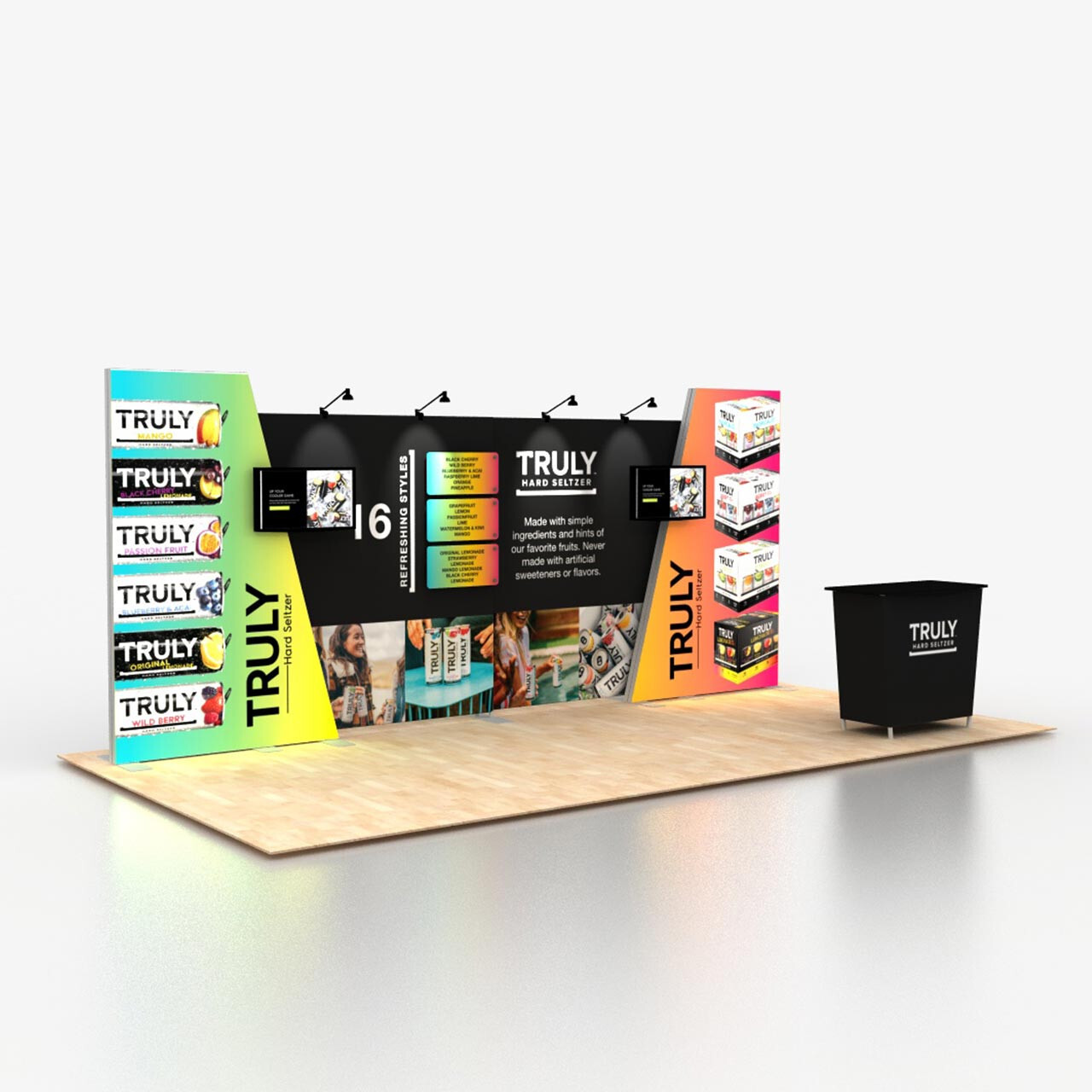
Lightweight, modular kits: pop-up frames, fabric walls, modular extrusion, free standing & portable counters, simple monitor mounts. You ship by ground in rolling cases, wheel it onto the show floor, and typically self-install with a small team in a few hours.
Why teams pick it
- Lowest cost of entry for a 10×20 that still looks professional.
- Minimal friction: ground shipping, light drayage (often none), and no I&D crew in many venues.
- Speed: short lead times, fewer approvals, fewer show services.
Where it struggles
- Difficult to create a true “wow” at a busy show.
- Limited support for heavy product(s), big screens, and private meeting rooms.
- Scalability to larger island footprints is limited.
Best fit
This works great for first-time exhibitors, startups, and cost-controlled programs focused on more shows versus maximum presence at one show. Also for teams without internal bandwidth for storage, freight staging, or managing union labor.
Pro tips
- Invest in lighting and graphic quality — the two biggest impact multipliers for portables.
- Design graphics in swappable modules (headers, side returns, hero panels) and double-sided graphics to change campaigns without reprinting everything.
- Engineer a 10×10 / 10×20 reconfiguration so one kit covers more floorplans.
Option 2: Rental Booths (10×20)
What it is
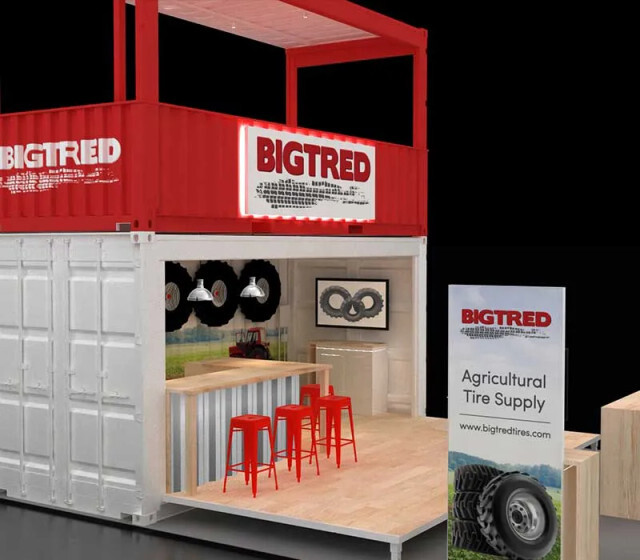
You rent structural components, furniture, flooring, A/V equipment, and services from an exhibit house for each show. The exhibit house typically handles I&D. Graphics are purchased and can be used again after the first show or you can order new graphics for other shows.
Why teams pick it
- Flexible design show-to-show, without owning or storing assets.
- Turnkey: one vendor coordinates I&D, project management and show compliance, and logistics. (Think white glove service and peace of mind)
- Ideal for one-offs: test markets or infrequent exhibiting.
Where it struggles
- Costs reset every show; no ownership ROI.
- Inventory availability and wear/tear can vary.
- Last-minute changes may be constrained by available parts.
Best fit
Businesses with 1–2 shows/year where you want impact without ownership. It's great to elevate your design without the burden of ownership. Also consider if its a long distance location of the event is where shipping owned assets would be costly or for small teams that need a full-service partner.
Pro tips
- Book I&D early — overtime hours are the stealth budget killer.
- Know important dates, rules/regulations published on your show facts. Knowing when advanced warehouse dates are can save you money and headaches.
- Ask for **photos** of the actual inventory (not just renderings).
Option 3: Custom Builds (10×20)
What it is
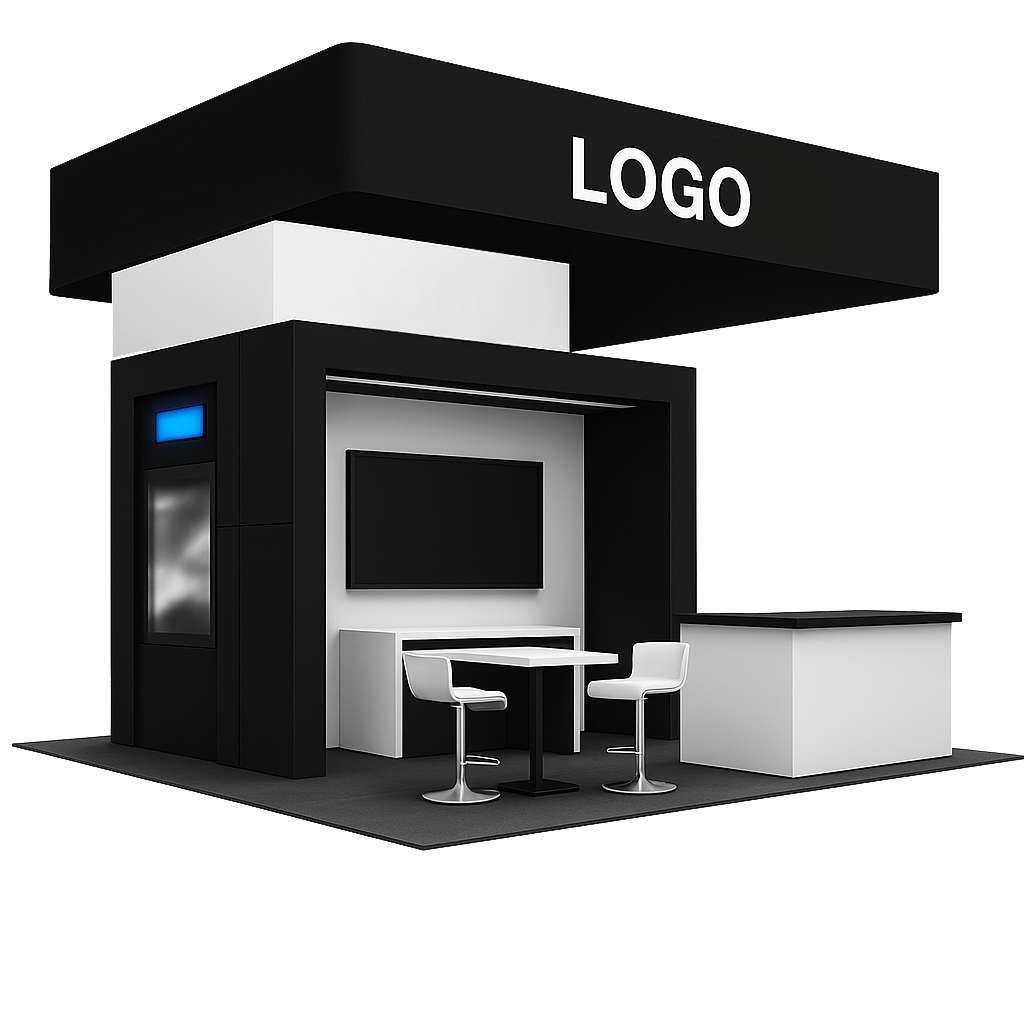
A booth fabricated specifically for your brand: premium materials, integrated technology, layered architecture. You own the structure after fabrication. Graphics included up front; later updates are incremental.
Why teams pick it
- Maximum presence & control: unique architecture, premium finishes, integrated tech.
- Durability: used across multiple seasons with planned refreshes.
- A clear leadership statement for high-stakes shows.
Where it struggles
- Upfront cost and heavier “expensive” operations (freight, drayage, I&D).
- Lead time: concepting, engineering, approvals, fabrication, and services.
- Requires reliable storage and maintenance.
Best fit
Great for ongoing programs needing a signature experience or complex demos (heavy product, multiple zones, private rooms) and brands that can amortize costs across multiple shows.
Pro tips
- Design for modularity (e.g., a 10×20 that can expand to 20×20).
- Work with your exhibit house on how your custom booth will be packed and organized for future shows.
- Lock a repair & refresh plan up front (scuffs happen).
Option 4: Premium Custom Portable Booths (10×20)
What it is
Advanced modular systems engineered to look and function like custom — but with portable logistics. Think clean cable management, integrated lighting, media mounts, architectural detail — packing into efficient cases or tubs.
Why teams pick it
- Custom-level presence without custom-level ops.
- Often self-setup friendly or low to no I&D in many venues.
- Ownership ROI: after show one, you’re mainly paying shipping/drayage.
Where it wins
- Reconfigurability: 10×10 → 10×20 layouts; add/remove kiosks or towers.
- Speed to show: shorter lead time than bespoke custom.
- Lower operational risk: fewer moving parts.
Best fit
This is great for brands exhibiting multiple times per year that need high visual impact but want to avoid repeated rental fees or heavy custom ops and teams who want brand control and long-term Total Cost of Ownership advantages.
Pro tips
- Map a two-year show calendar; plan reconfigurations ahead (during the design process) to maximize reuse.
- Own the AV you’ll reuse frequently; rent specialty pieces per event.
- Treat cases as part of the design: plan door widths, elevator dimensions, and dock timing.
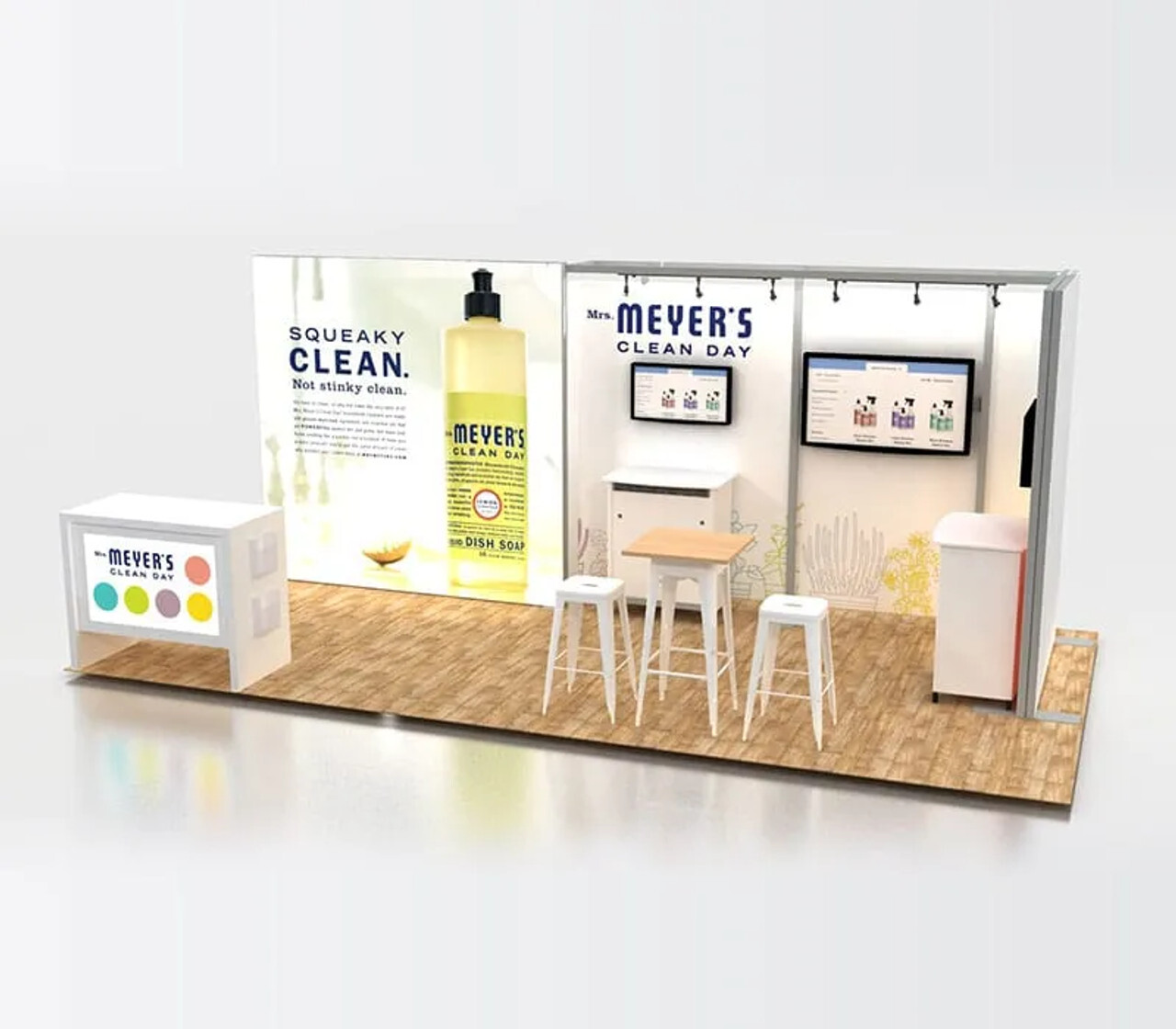
Option 5: Hybrids That Actually Work
A) Own Core + Rental Exhibit (10×20)
Own the core elements you always need (demo stations, counters, key kiosks). Rent the rest of the exhibit for each show (walls, towers, lightboxes, overhead features).
- Why it’s compelling: If it’s not a vendor’s existing inventory, they will have to charge you to build it from scratch anyways. Also, consistency on high-value touchpoints, design flexibility around them.
- Tradeoffs: You still incur a rental exhibit cost each show; coordination complexity rises.
- Best use: Mixed booth sizes across shows, your design requires some elements of custom that cannot be accomplished through a rental inventory, and seasonal campaigns.
B) Custom Portable + Elements (10×20)
Start with a premium custom portable base (owned), then add a few custom elements (owned counters, special kiosks, reception desk) to elevate the look.
- Why it’s compelling: Portable logistics + elevated brand finish.
- Tradeoffs: Slightly higher operational costs than a pure portable, but much lower than full custom build.
- Best use: Brands wanting a hero look without heavy operational needs and benefiting from modularity.
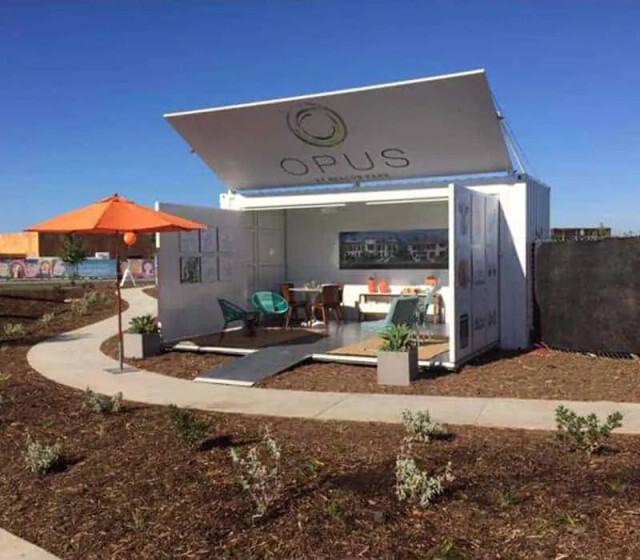
C) Targeted Component Rentals
Add a few rented showpieces (LED tiles, hero tower, reception desk) to a portable or custom portable base.
- Why it’s compelling: “Dial-up” presence when needed without long-term cost.
- Tradeoffs: Inventory risk and cost creep if you over-rent.
- Best use: One marquee show, product launch, or an atypically large footprint.
The Numbers:
10×20 Cost Comparison with Line Items
Treat these numbers as a baseline and plug in your vendor rates when planning. Actual costs vary by city, venue, show, and labor. We’ve excluded storage and maintenance (repairs/refurb) for the custom build option since those fees fluctuate across vendors.
Line-Item Assumptions (per show unless otherwise noted)
- Standard Portable (owned):
Booth price (first show): $10,000 (graphics included)
Shipping: $500 (ground)
Drayage: $500 (often zero if wheeled in, but plan for this average)
I&D: $0 (self-setup) - Premium Custom Portable (yours) (owned):
Booth price (first show): $25,000 (graphics included)
Shipping: $1,000
Drayage: $500
I&D: $0 - Rental Booth (per show, repeat booth price discounted after show one):
Booth price (first show): $20,000 (structure + graphics)
Booth price (repeat shows): $14,000 (30% less)
Shipping: $2,000
Drayage: $1,000
I&D: $3,000 - Custom Build (owned):
Booth price (first show): $40,000 (graphics included)
Booth price (repeat shows): $0 (you own it)
Shipping: $2,000
Drayage: $2,000
I&D: $4,000 - Hybrid: Own Core + Rental Booth (repeat booth price discounted after show one):
Booth price (first show): $35,000 (core + rent the rest)
Booth price (repeat shows): $14,000
Shipping: $2,000
Drayage: $2,000
I&D: $4,000 - Hybrid: Custom Portable + Custom Elements (owned):
Booth price (first show): $28,000 (graphics included)
Booth price (repeat shows): $0 (owned)
Shipping: $2,000
Drayage: $2,000
I&D: $2,000
Totals (10×20) — 1, 3, and 5 Shows
|
Booth Option |
1 Show |
3 Shows |
5 Shows |
|
Standard Portable |
$11,000 |
$13,000 |
$15,000 |
|
Premium Custom Portable |
$26,500 |
$29,500 |
$32,500 |
|
Rental Booth |
$26,000 |
$66,000 |
$106,000 |
|
Custom Build |
$48,000 |
$64,000 |
$80,000 |
|
Hybrid: Own Core + Rental |
$33,000 |
$69,000 |
$113,000 |
|
Hybrid: Custom Portable + Custom Elements |
$34,000 |
$46,000 |
$58,000 |
Line-Item Detail (so buyers see exactly what repeats)
|
Booth Option |
Booth Price (1st) |
Booth Price (Repeat) |
Shipping |
Drayage |
I&D |
1 Show |
3 Shows |
5 Shows |
|
Standard Portable |
$10,000 |
$0 |
$500 |
$500 |
$0 |
$11,000 |
$13,000 |
$15,000 |
|
Premium Custom Portable |
$25,000 |
$0 |
$1,000 |
$500 |
$0 |
$26,500 |
$29,500 |
$32,500 |
|
Rental Booth |
$20,000 |
$14,000 |
$2,000 |
$1,000 |
$3,000 |
$26,000 |
$66,000 |
$106,000 |
|
Custom Build |
$40,000 |
$0 |
$2,000 |
$2,000 |
$4,000 |
$48,000 |
$64,000 |
$80,000 |
|
Hybrid: Own Core + Rental |
$25,000 |
$14,000 |
$2,000 |
$2,000 |
$4,000 |
$33,000 |
$69,000 |
$113,000 |
|
Hybrid: Custom Portable + Custom Elements |
$28,000 |
$0 |
$2,000 |
$2,000 |
$2,000 |
$34,000 |
$46,000 |
$58,000 |
What the math says:
- Premium Custom Portable vs. Rental
At 1 show, they’re essentially tied (~$26–27K).
At 3 shows, the premium custom portable is ~$36K cheaper (29.5K vs. 66K).
At 5 shows, it’s ~$74K cheaper (32.5K vs. 106K).
You also maintain brand control and asset availability. - Premium Custom Portable vs. Custom Build
Custom build drops to pure ops after show one but still lands at $80K by five shows, which is ~2.5× the premium custom portable for comparable footprint. - Hybrids
Own Core + Rental Exhibit offers flexibility but the repeating rental components cost drives up the cost ($113K by five shows).
Custom Portable + Custom Elements is leaner (58K by five shows), but still ~1.8× the premium custom portable. - Standard Portable
It’s the cheapest path by far — but if you need high-impact presence, it’s often not the right comparison set. It’s an “entry option,” not a “flagship option.”
Beyond the Math: How to Maximize Presence Without Overspending
Even with the numbers on your side, presence comes from smart design moves. Here’s where most exhibitors quietly win or lose.
1) Message Hierarchy (Your Most Powerful Visual)
Think in three viewing distances:
15–20 feet (drive-by promise): One big claim. Not three. One.
Example: “The Fastest Way to Close Security Gaps."
6–10 feet (support pillars): Two or three bullets that prove your claim.
Example: “Agentless coverage • Deploys in minutes • SOC-ready workflows”
3–5 feet (proof/demo): Screens, product walk-ups, or quick explainers.
It organizes the space so visitors know where to start and what to do next. That’s how walk-bys turn into conversations.
2) Lighting: The Most Underrated Investment
Most booths — especially rentals and portables — under-light. Add:
- Backlit displays and lightboxes (illuminate your graphics)
- Accent lighting (to make key elements pop)
- Even distribution (avoid hotspots).
You’ll look bigger and more premium instantly. Lighting is the highest ROI design spend after graphics.
3) Graphic Design & Artwork
Many teams obsess over layout and architecture, but underinvest in the graphic designer. Strong, well-executed graphics are the difference between a “nice booth” and “must-see.” Trade shows are a specialty: you need someone who understands large-format printing, viewing distances, materials (fabric, vinyl, backlit films), and file prep. Avoid lowest-bid marketplaces (e.g., Fiverr) or digital-only designers who’ve never produced for trade shows.
4) Traffic Flow: Let People In
- Open the corners and consider angled entries to reduce the psychological barrier.
- Leave space for two or three impromptu conversations without blocking demos.
- If you hand out swag, don’t crowd the reception desk near your demo pipeline.
In a 10×20, inches matter. A great rule: visitors should know in one glance where to stand, what to read, and where to talk.
4) Own What You Use Often (Rent What You Don’t)
- Own your AV (two 55–65″ displays, compact media players) — you’ll use them every show.
- Rent special features (giant LED walls, unique fixtures) only for marquee shows.
- Pre-cable and label everything; build standard setup checklists.
You’ll reduce setup time and crew costs, and you won’t be at the mercy of last-minute vendor substitutions.
5) Modularity by Design
- Build a kit-of-components: reception, demo, meeting nook, storage.
- Design graphic skins so product/campaign updates don’t trigger a full reprint.
- Plan 10×10 and 10×20 configurations from the start so one kit covers more shows.
Logistics: The Hidden Cost Drivers You Can Actually Control
Drayage & I&D (and When You Can Avoid Them)
- Portables often avoid heavy drayage and I&D, especially if wheeled in. But confirm your venue’s rules (some unions require handling everything)
- Rentals almost always involve I&D crews; try to avoid overtime windows and weekend installs
- Custom builds require more I&D hours. Get estimates in writing — and a plan for minimizing OT.
Pro move: Schedule deliveries and target move-in windows that avoid overtime. Marshaling yard delays frequently cause forced OT.
Freight Strategy
Get the booth to the marshaling yard early. Late arrivals = overtime and stress
Right-size your freight: fewer crates/lighter shipping keeps costs controllable.
Use accurate weights and BOLs to prevent re-weigh penalties.
Show Services
Order electrical, internet, and rigging early. Late orders are costly and risky.
Map electrical drops/schematics on your floorplan; long cable runs cost time and trip hazards.
Confirm cleaning if you have flooring with specific care requirements.
Storage & Turnarounds
After the show, do a condition check ASAP (photos + notes).
Store with a partner who offers inspection and small repairs on intake.
For fast back-to-back shows, pre-pack swap kits (spare hardware, cables, velcro, touch-up paint).
When Each Option Fits: Scenarios You Can Recognize
Scenario A: Startup Doing 2–3 Shows This Year
Primary goal: Learn fast, control costs, look credible.
Recommended path: Standard Portable (or Custom Portable + Custom Elements if you need a bit more polish).
Why: Minimal operational complexity, easy to re-skin, low risk if your messaging evolves quickly.
Upgrade move: Buy a custom counter, sampling station, kiosk, or demo station if going to more than one show. Rent the same components if only going to one show.
Scenario B: Growth-Stage Brand Doing 4–6 Shows
Primary goal: High-impact presence, controlled spend across multiple shows.
Recommended path: Premium Custom Portable (yours).
Why: You’ll beat rental by show two and keep compounding savings; you’ll look premium without custom’s heavy operational requirements.
Upgrade move: Add select custom elements (owned counters, branded kiosks) to elevate look while keeping operational needs portable.
Scenario C: Enterprise with Flagship Launch
Primary goal: Dominance and deep product storytelling.
Recommended path: Custom Build for flagship; Custom Portable + Elements for satellites.
Why: A bespoke structure is justified when the stakes and scale are high. Use the portable variant to keep regional shows on brand at lower operational cost.
Upgrade move: Rent a LED Tiles or overhead features for the hero show only.
Scenario D: Multi-Region Program
Primary goal: Reduce freight, customs risk, and damage probability.
Recommended path: Rental for multi-region trade shows throughout the year; ship **owned core** demo kits or counters.
Why: National freight is expensive; rentals reduce complexity, and owned cores keep your brand consistent.
Upgrade move: Create portable “brand core” display cases with everything labeled and checklist-ready.
Hybrid Strategies: How to Blend Ownership and Flexibility
Own Core + Rental Exhibit (Deep Dive)
This model works when you know what never changes (core demos/counters) and what often changes (walls, towers, meeting rooms). The exhibit repeats at roughly 70% of show-one price in our model; the core is yours.
Risks to watch
Rental inventory availability (book early).
Creative consistency if your exhibit house uses different materials show to show.
Creep in rental upgrades that slowly approach full rental costs.
How to keep it efficient
Standardize heights, finishes, and mounting on your owned core assets.
Keep a joint spec sheet that exhibit houses must match (fasteners, cable routing, finish tolerance).
Set not-to-exceed budgets on booth rental quotes.
Custom Portable + Elements (Deep Dive)
Use your premium custom portable as a structural spine. Layer two or three owned custom elements that can travel (front counter, product kiosk, demo table). This elevates the look with a small ops penalty vs. a pure portable — but far less than full custom.
Benefits
High perceived value with low recurring ops.
Element ownership gives you brand consistency across shows.
Reconfigurability lets you cover 10×10 and 10×20 with the same kit.
How to keep it efficient
Build elements to portable display cases (doorways, elevator constraints, escalators).
Use quick-connect electrical. Label everything (up to and including cable lengths).
Maintain a spares kit (hardware, LED strips, Velcro, touch-up pens).
Design: Looking Bigger Than Your Footprint
Visual Architecture
Anchor the backwall with a hero graphic (or modular lightbox).
Add vertical punctuation (tower or header) to read from down the aisle.
Use contrasting material textures (matte vs. gloss) to add depth without cost.
Content Density
Err on the side of less copy, larger type.
Convert long product lists into icons or three-column bullets.
Keep brand marks clean; avoid logo clutter on every surface.
Interaction Design
Place one high-gravity demo that can handle three viewers at once.
Use QR codes for deeper dives; keep on-booth copy short.
Provide a comfortable seating area / casual lounge if space allows (2–3 chairs, 1 cafe table).
Timelines and Checklists That Save You Money
A Realistic Working Backward Plan
- 12–10 weeks out: Lock booth path, approve concept & budget.
- 10–8 weeks: Graphics copy freeze; start fabrication (custom) or reserve inventory (rental).
- 8–6 weeks: Order AV; confirm electrical, internet, and rigging; book freight.
- 6–4 weeks: Graphics to print; staff travel; lead capture configured.
- 4–3 weeks: Show services orders due (electrical, material handling, cleaning).
- 2–1 weeks: Pack out; QA check; ship.
- Move-in: I&D (if required), function test, staff walk-through.
- Post-show (5 days): Debrief; cost vs. plan; fix-list for next time.
Contingency Budget (Even for Owned Booths)
- Damage allowance: 5–10%.
- Overtime labor: if you miss target window.
- Electric surprises: extra drops, adapters.
- Re-weigh fees: avoid by accurate BOLs and scales.
Sustainability (and Ops Sanity)
- Fewer crates, more reuse: premium custom portables shine here — lighter shipping and repeat use = less waste and lower emissions.
- Modular refresh: swap graphics and small components, not entire walls.
- Recyclable graphics: ask vendors for options and take-back programs.
- Right-sizing: don’t move a 20×20 when a 10×20 will do; you’ll cut drayage and I&D.
Vendor & Partner Checklist (Copy/Paste Into Your RFP)
Ask every prospective partner the same questions:
- Lead times and “freeze” dates (design, graphics, engineering).
- I&D plan: crew size, estimated hours, and how they avoid overtime.
- Freight strategy: dock targets, marshaling yard playbook.
- Damage/repair: turnaround time between shows.
- Storage: location, cost, and included services (inspection, touch-ups, re-packing).
- Warranty on structure/hardware.
- Graphics: materials, color management, expected lifespan.
- Modularity: documented reconfiguration options and compatible add-ons.
- Sustainability: materials, reuse models, end-of-life plan.
- Pricing clarity: break out booth price, shipping, drayage, I&D, AV, electrical. No gray zones.
Decision Framework (Fast)
Use these rules of thumb to get to a shortlist:
- One show → Rental (if impact is critical) or Standard Portable (if cost control is king).
- Three to five shows → Premium Custom Portable (yours) for the best mix of impact, flexibility, and TCO.
- Need “wow” architecture → Custom Build (if you can amortize across multiple hero shows).
- Frequent design refresh with owned touchpoints → Hybrid: Own Core + Rental Exhibit (track the repeat rental cost carefully).
- Want elevated presence without heavy operational costs → Hybrid: Custom Portable + Elements or simply Premium Custom Portable with targeted rentals.
Bottom Line
There isn’t one “best” booth — there’s a best booth for your plan. If you’re doing a single show and you want a premium look without commitment, rental can make sense. If you’re building a program of shows, a Premium Custom Portable delivers custom-like presence with portable-like ops — and the math clearly favors it by show two. Custom builds are right for flagships and complex demos (with the program to amortize). Hybrids give you flexibility, but track those repeating rental costs carefully.
Glossary (quick reference)
- Drayage (Material Handling): Fees for moving freight from the dock/marshaling yard to your booth and back.
- I&D (Install & Dismantle): Labor to set up and take down your booth; often union, with overtime rules.
- Marshaling Yard: Staging area where trucks check in before unloading at the venue.
- Advance Warehouse vs. Direct-to-Show: Ship to a warehouse weeks prior (usually safer, sometimes pricier) vs. deliver straight to show site (tighter timing).
- Electrical Drop: The power connection placed at your booth; long runs and late orders add cost.
- SEG (Silicone-Edge Graphics): Fabric graphics finished with a silicone beading that presses into frame channels for a tight, frameless look.
- Backlit Graphics: Graphic prints produced for lightboxes so colors stay saturated when lit from behind.
- Case-to-Counter: Shipping case that converts into a branded counter on the floor.
- Effective Resolution: The dpi at final print size; large fabric backdrops typically target ~100–150 dpi at full size.
- Pantone/Spot Color: Specific ink formulas used to match brand colors consistently across print processes.
- Proof (Hard Proof/Swatch): Physical sample for color/quality sign-off before full production.
- BOL (Bill of Lading): Freight document listing piece count, weights, and destination—used for check-in and re-weighs.
- Target Move-In: Your assigned delivery window; missing it can force overtime charges.
Tradeshow Booth FAQs
Whether you're planning your first show or your fiftieth, we know you probably have questions. From how we stand out as a partner to whether you should rent or buy, we’ve answered some of the most common questions our clients ask. If you don’t see your question here, just reach out — we’re always happy to help.